AI Cannot Teach Judgment
The Work Ahead 2026
Seven years ago, college students told me they didn’t know they needed internship experience to reach their career goals. They didn’t know where to find resources to help them land work, and every application process felt daunting. Some said their school advisors steered them toward careers they had no interest in. I listened, and Project Alpaca was born.
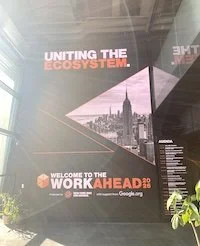
At last week’s The Work Ahead conference, which emphasized how New York City is grappling with AI’s impact on education and employment, I learned that CUNY has collaborated with the New York Jobs CEO Council and Accenture to develop an AI tool, Career Coach, that will be available to Hunter College students in a matter of days. Designed with employer input, it helps students build resumes tailored to different roles, practice video interviews, and track application windows for internships.
I believe this tool will help many more students move faster through the job search. A school that makes it widely available to their students is addressing challenges CUNY students have voiced for years. But it is only part of the story of how to get the job.
What AI cannot teach is judgment.
The lack of balanced judgment has failed too many students launching their careers. Sometimes it is the judgment of well-intentioned advisors who didn’t have the right information. Sometimes it is a student’s blind reliance on ChatGPT or Claude, producing assignments, reports, and resumes that don’t reflect their authentic abilities.
What students need more than ever now is training that helps them find their own voice, and the confidence to use it.
AI is trained to recognize dominant patterns and to sound confident while sharing information. A tool built with employer input will reflect what employers already look for. But what happens when thousands of resumes begin to look the same? That is already happening. How will employers identify authenticity and talent?
We always have to ask: Which voices were left out of the data? Which voices are large language models trained on? And whose experiences, then, are treated as the standard for a “good” candidate?
At Project Alpaca, we invite mentors from different roles and companies to share how they got their jobs and how they are building their careers. They talk about lessons learned, how they pivoted around obstacles, and which circumstances fueled their greatest growth. This diversity of stories can’t be replaced by AI, which does not value all of them equally.
We bring these perspectives to students, and we urge our mentees to discern for themselves what could work for them. We never take decision-making away from them. Instead, we help them build the confidence to trust themselves. In doing so, we strengthen the critical thinking and problem-solving skills that every employer says they value.
And because this happens within a community of people who care, we are also rebuilding trust between individuals from different economic groups. Students from every walk of life can build meaningful relationships with experienced professionals rather than feel intimidated. This matters so much more in industries that were not built with them in mind, but where their impact will be felt and their voices are very much needed.